

Private Label Pet Food Manufacturing is moving from a low-cost option toward a strategic growth channel. According to the American Pet Products Association’s 2025 State of the Industry report, U.S. pet industry spending reached approximately $152 billion in 2024. Pet food and treats represented about $65.8 billion. These figures show strong demand, but they do not guarantee success for every private label launch.
Dr. Tony Buffington, a respected veterinary nutrition expert, states, “There is no one diet that is right for all cats.” This principle also applies to dogs, formulas, and markets. A manufacturer must match nutrition, ingredients, packaging, and claims with a clearly defined pet owner. Reports from Packaged Facts and NIQ indicate continued interest in premium, functional, and retailer-owned pet products. However, consumer interest is not enough. Product consistency, traceability, feeding trials, and transparent documentation matter more when a brand promise meets a real pet bowl.
A practical evaluation should examine ingredient sourcing, facility certifications, minimum order quantities, testing procedures, and recall-readiness. Walk through the production line mentally: raw materials arrive, batches are recorded, samples are tested, and finished bags reach a warehouse. Any weak step can damage trust. The process is not perfect. Cost pressure may tempt brands to simplify too much. That deserves reflection. Strong partnerships usually begin with evidence, not attractive packaging. This guide explains how to assess manufacturers, compare capabilities, and build a private label pet food program with greater confidence.
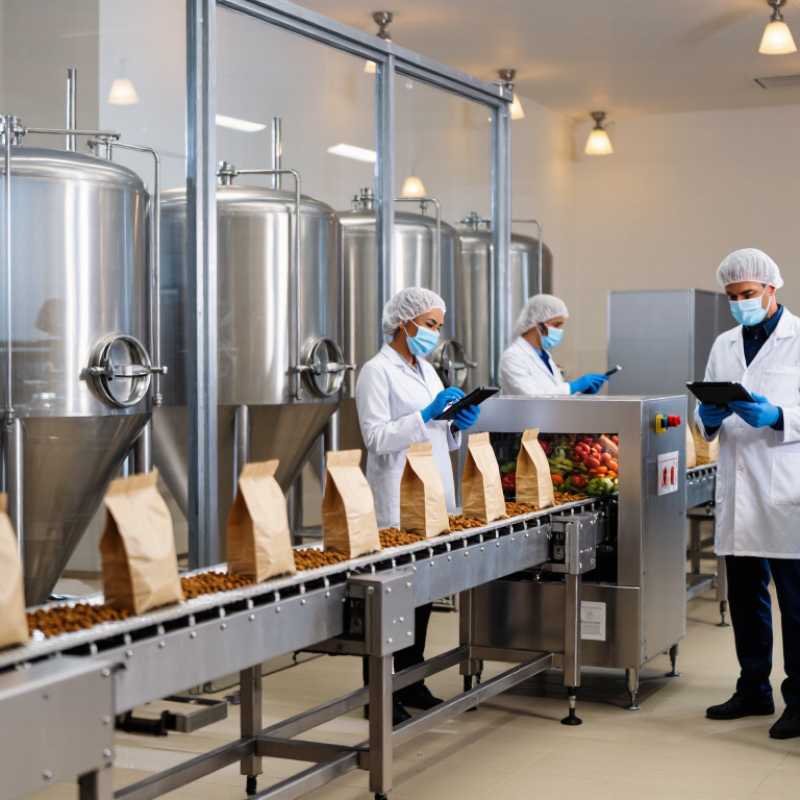
Define the product before comparing manufacturers. Specify the animal species, life stage, and intended use, such as a complete daily food or a supplemental topper. Describe the format, texture, and package size you want. A dry formula in a resealable 2-kilogram bag needs different production and packaging capabilities from a chilled pâté in a tray. Small details matter.
Write down ingredient preferences and exclusions, then separate firm requirements from ideas you can reconsider. Include target nutrient levels, feeding guidance, and any claims you hope to make. Have a qualified animal nutritionist review the nutritional brief; ingredient lists alone cannot confirm that a food is suitable for its intended purpose. Ask potential manufacturers what testing, formulation support, and batch records they can provide. Request sample packaging dimensions, too. Keep it practical.
Your first specification may be too ambitious. A desired protein level, unusual ingredient, or small order quantity could affect cost and production options. That is useful to discover early. Share a clear brief, then ask the manufacturer to identify constraints and propose workable adjustments. Record each agreed change, including formula details, texture, package materials, and sample approval criteria. Specific requirements make comparisons fairer and reduce misunderstandings during development.
Start by defining the product you want to make: its format, target animal, key ingredients, pack size, and expected order volume. Record these details in a one-page brief. It helps manufacturers answer the same questions and makes their proposals easier to compare. Search for facilities with relevant experience, such as producing dry kibble, wet food, or treats. Ask how they manage ingredient sourcing, batch records, quality checks, and sample production. A polished website is not proof of capability. Request specific examples and supporting documents.
Tips: Ask about minimum order quantities, lead times, and sample costs early. Request a recent product specification and a clear outline of quality procedures. Keep notes after every call.
Shortlist three to five manufacturers whose capabilities match your brief. Compare their answers, not just their prices. Check whether they explain testing, traceability, storage, and how they handle production issues. If possible, visit the facility or arrange a live video walkthrough. Ask for references from comparable customers, with permission. Then evaluate a pilot batch for texture, appearance, packaging, and consistency. I have found that small details matter, but a first sample can still mislead; production-scale results may differ. Keep the shortlist flexible until documentation and communication both feel reliable.
Use regulatory due diligence as one part of researching and shortlisting qualified manufacturers.
FDA’s FSMA statute sets inspection-frequency benchmarks for domestic food facilities: high-risk facilities at least once every 3 years, and other facilities at least once every 5 years. These intervals are regulatory benchmarks—not a measure of a manufacturer’s quality or a guarantee of its inspection schedule. Confirm each candidate’s applicable status and records directly.
Source: U.S. FDA, FSMA inspection frequency requirements.
Choosing a private label pet food manufacturer starts with evidence, not polished sales materials. Ask for current certifications, issuing bodies, scope, and expiration dates. Useful systems may include GMP, HACCP, and recognized food safety certifications. A certificate alone proves little. It must cover the actual facility producing your formula.
Review how the manufacturer controls ingredients, allergens, moisture, pathogens, and foreign materials. Request recent laboratory results for each product category. Check whether testing is performed by an independent laboratory. Batch records should connect suppliers, production dates, test results, and finished goods. Clear traceability matters when a problem appears.
Ask to inspect the facility, even virtually. Look for clean storage areas, sealed ingredient containers, pest controls, and separate raw material zones. Small details matter.
Production capability needs equal attention. Confirm minimum order quantities, trial-batch options, formula development support, packaging equipment, and realistic lead times. Ask how quality staff handle deviations and recalls. Their answer should be specific, documented, and easy to verify.
I would also compare sample batches over time, because one excellent sample can hide inconsistency. No audit is perfect. My own review would include an uncomfortable question: what happens when a supplier misses a specification? A reliable partner should explain corrective actions without vague promises.
A dependable private label pet food manufacturer should explain each formula clearly. Ask for ingredient percentages, nutrient targets, feeding guidance, and testing procedures. A qualified veterinary nutritionist should review the recipe, especially for life-stage claims. Request recent certificates of analysis for finished batches, not only raw materials. Details matter.
Compare formulas line by line. One may use named animal proteins, while another relies more heavily on plant ingredients. Check calories, protein sources, fat levels, supplements, and ingredient substitution policies. Ask who owns the formula and whether changes require your approval. I once focused too much on attractive ingredient lists and missed a major difference in moisture content. That mistake affected my pricing comparison.
Minimum orders often apply separately to recipes, package sizes, and flavors. Confirm the exact quantity per SKU. Then calculate the full cost, including formulation, packaging plates, testing, freight, and storage. A low unit price may hide expensive setup fees. Ask for tiered pricing at several order volumes. Cash flow matters.
Lead times should include sampling, artwork approval, production, quality checks, and shipping. Request a written timeline with realistic buffer days. Some manufacturers quote only factory production time, which can create unpleasant surprises. Compare payment terms and reorder timing as well. A supplier promising speed without explaining capacity deserves careful questioning. My own estimates have been too optimistic before. Planning with extra time is less exciting, but usually more reliable.
How to Find a Private Label Pet Food Manufacturer
Request product samples before discussing large production runs. Check texture, smell, color, and package seals. Compare each sample with its ingredient specification. A shiny appearance does not prove quality. Ask how ingredients are sourced, stored, and tested. Request recent laboratory reports for nutrition, moisture, and microbiological safety. Do not accept vague answers. One overlooked detail can affect an animal’s health.
Review the manufacturing contract with care. It should define formulas, ingredient substitutions, batch records, testing duties, delivery standards, and complaint handling. Clarify who owns the formula and finished packaging artwork. Ask what happens when a batch fails inspection. Packaging needs equal attention. Confirm material strength, barrier protection, printing accuracy, lot coding, and expiration-date visibility. A beautiful pouch is still weak if its seal fails during transport. I have seen packaging discussions focus on design while ignoring storage conditions. That is an easy mistake to repeat.
Tips: Visit the facility when possible. Observe cleaning routines, pest controls, employee hygiene, and production flow. Ask for a written quality-control plan. It should explain sampling frequency, equipment calibration, release approval, and traceability. Request a small pilot run before full production. Keep your own retained samples and inspection records. If the manufacturer resists reasonable verification, pause the negotiation. Trust matters, but documented evidence matters more. Some checks may feel excessive. They are not.
| Evaluation Area | What to Verify | Recommended Evidence | Practical Acceptance Criteria | Warning Signs | Priority |
|---|---|---|---|---|---|
| Regulatory and Facility Status | Whether the facility is legally permitted to manufacture and distribute pet food in its target market. |
|
The legal entity, production address, and authorized product categories are consistent across all documents. | Unclear manufacturing location, expired documents, or refusal to identify the actual production site. | Critical |
| Product Formula and Nutritional Adequacy | Ingredient composition, guaranteed analysis, feeding stage, calorie content, and nutritional claims. |
|
The formula is suitable for the stated species and life stage, and label claims are supported by formulation records and applicable feeding or nutrient standards. | Vague ingredient descriptions, unsupported health claims, or a formula that changes without written approval. | Critical |
| Sample Verification | Whether the production sample matches the approved formula, appearance, texture, aroma, and declared package quantity. |
|
Approval is based on a clearly identified sample, and the manufacturer agrees that future batches must meet the approved specifications. | Only photographs are provided, samples are unlabeled, or the supplier will not retain a reference sample. | High |
| Ingredient Supplier Controls | Traceability, specifications, allergen information, and approval procedures for raw materials. |
|
Each material can be traced to a supplier and lot, and nonconforming ingredients are segregated before use. | Uncontrolled substitutions, missing lot records, or ingredients accepted without documented checks. | High |
| Manufacturing Process Controls | Controls for weighing, mixing, cooking or extrusion, drying, cooling, filling, and process deviations. |
|
Critical steps have documented limits, trained operators, verification records, and a defined response to deviations. | Informal procedures, missing batch records, or no documented investigation of process failures. | Critical |
| Microbiological and Chemical Testing | Testing appropriate to the product type and risk profile, including microbial hazards, moisture, toxins, and nutritional parameters. |
|
Testing frequency, methods, and limits are documented, and out-of-specification results trigger product disposition and investigation. | Generic certificates unrelated to the lot, results without test dates, or no documented response to failed results. | Critical |
| Foreign-Material Prevention | Controls for metal, glass, plastic, stones, and other physical hazards. |
|
Controls are appropriate to the production line and are checked at defined intervals with documented results. | Equipment checks are undocumented or failed checks do not lead to product isolation and investigation. | High |
| Packaging Material Compliance | Food-contact suitability, barrier properties, seal integrity, print accuracy, and compatibility with the product. |
|
Packaging protects the product during the stated shelf life, and the approved artwork matches the final printed package. | Unapproved packaging substitutions, unreadable mandatory information, weak seals, or inconsistent package dimensions. | High |
| Label and Artwork Review | Product name, species, net quantity, ingredient list, guaranteed analysis, feeding directions, manufacturer information, and lot coding. |
|
No package is released until the final artwork is approved in writing and required information is legible and consistent with the formula. | Last-minute artwork changes, conflicting nutritional values, missing lot codes, or unsupported claims. | Critical |
| Traceability and Recall Readiness | Ability to trace ingredients, packaging, production records, and finished goods through distribution. |
|
Finished goods can be linked to production and material lots, and the facility periodically tests its recall process. | Lot codes are absent or unreadable, distribution records are incomplete, or no recall procedure exists. | Critical |
| Contract Terms | Product specifications, ownership of formulas and artwork, minimum order quantity, lead time, payment terms, and change-control requirements. |
|
The contract defines acceptance standards, responsibilities, remedies, confidentiality, and written approval requirements for formula, supplier, process, and packaging changes. | Verbal commitments only, no measurable specifications, or the manufacturer can change materials without notice. | Critical |
| Quality Agreement and Nonconformance Handling | Responsibilities for inspection, batch release, complaints, deviations, corrective actions, and product holds. |
|
Each party has defined responsibilities, response times, documentation requirements, and authority to place product on hold. | Complaints are handled informally or there is no process for investigating recurring failures. | High |
| Warehouse and Distribution Conditions | Storage, stock rotation, pest control, transport conditions, and protection from moisture, heat, and contamination. |
|
Finished goods are stored in clean, dry conditions with defined stock rotation and documented shipment controls. | Damaged cartons, uncontrolled humidity, mixed lots without records, or evidence of pest activity. | High |
| Audit and Ongoing Performance | Whether the manufacturer permits reasonable audits and consistently meets quality, delivery, and complaint targets. |
|
Audit findings are documented, corrective actions have owners and deadlines, and performance is reviewed after production begins. | Audit access is denied without a valid reason or repeated issues remain unresolved. | Standard |
| Commercial Pilot Run | Whether the factory can reproduce the approved sample at a realistic production scale. |
|
The pilot batch meets approved specifications, production records are complete, and any deviations are resolved before routine orders. | Only a laboratory sample is supplied, or pilot results are not linked to a production lot. | High |
Define the animal species, life stage, and intended use. Specify the format, texture, package size, nutrients, and feeding guidance. Separate firm requirements from flexible ideas. Small details matter.
Yes, a qualified animal nutritionist should review the nutritional brief. Ingredient lists alone cannot confirm suitability. The review should match the food’s intended purpose and life stage. Do not guess.
Request current certifications, issuing bodies, scopes, and expiration dates. Check whether each certificate covers the actual production facility. Review controls for allergens, moisture, pathogens, and foreign materials. A certificate alone proves little.
Confirm minimum order quantities, trial batches, equipment, support, and realistic lead times. Ask whether the facility can produce your chosen texture and package format. Unusual ingredients or small orders may increase cost. That may change your plan.
Request recent testing for nutrients, moisture, and microbiological safety. Independent laboratory results can provide stronger evidence. Batch records should connect suppliers, production dates, test results, and finished products. Traceability matters during problems.
Inspect texture, smell, color, seals, and consistency across samples. Compare every sample with its ingredient specification. Request sourcing, storage, and testing information. One attractive sample proves little.
The contract should define formulas, substitutions, testing duties, delivery standards, and complaint handling. Clarify ownership of the formula and packaging artwork. Include procedures for failed batches and corrective actions. Vague promises are risky.
Check material strength, barrier protection, printing accuracy, lot codes, and expiration visibility. Ask for cleaning procedures, equipment calibration, sampling frequency, and release approval. A beautiful pouch can still fail in transport. That is easy to miss.
A small pilot run can reveal inconsistency before full production. Keep retained samples and inspection records for comparison. Review batches over time, not just one successful sample. My own review might still miss something.
Finding the right partner for Private Label Pet Food Manufacturing begins with clearly defining your product requirements. Determine the target pet type, life stage, ingredients, nutritional goals, dietary preferences, product format, packaging style, and expected market position. Then research qualified manufacturers and create a shortlist based on their experience, facilities, communication, and ability to support your product concept.
Before making a decision, carefully evaluate certifications, food safety systems, testing procedures, production equipment, and quality control capabilities. Compare available formulas, minimum order quantities, pricing structures, production schedules, and lead times to identify the best operational fit. Request product samples to assess quality and consistency, and review contracts covering specifications, ownership, confidentiality, delivery terms, and responsibilities. Finally, confirm packaging options, batch testing, inspection procedures, traceability, and ongoing quality monitoring so your finished pet food can be produced reliably and consistently.