

Canned dog food can look simple on a shelf: a metal can, a familiar label, and a smooth pâté or visible pieces in gravy. Behind that small package lies a demanding process. Ingredients must be prepared, filled, sealed, and heat-processed with care. Texture, aroma, and consistency matter, but so do clear quality controls and dependable sourcing. Small differences can show up in the finished product.
For this guide, pet food processing researcher Dr. Greg Aldrich offers a useful principle: “A formula must perform through processing, not only on paper.” This is an editorial summary, not a verified verbatim quotation. Global buyers can use that principle when comparing the Top 10 Canned Dog Food Manufacturers: ask how each supplier manages formulation, retort processing, batch consistency, packaging, and documentation. A polished brochure is not enough. Request concrete details, such as sample specifications, production capabilities, and quality assurance procedures. Then compare answers against the needs of your market and customers.
No shortlist is perfect. Supplier fit depends on more than factory size or price. A manufacturer with broad capacity may not suit a smaller launch, while a specialist may have limited flexibility. This overview introduces companies for further evaluation, not as a guarantee of performance. Canned Dog Food Production varies across facilities, recipes, and equipment. Buyers should verify current claims directly and assess samples before making commitments. Even a careful review leaves questions. That is a reason to investigate further, not to ignore the opportunity.
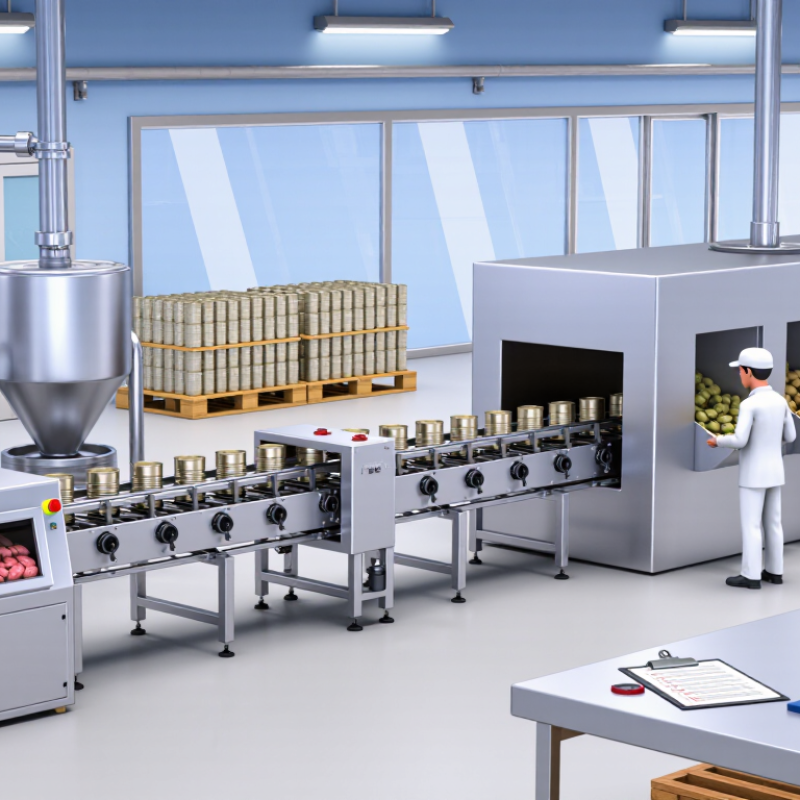
Global canned dog food manufacturers produce complete wet meals in pâté, loaf, chunks-in-gravy, and stew formats. They may also make complementary toppers, which are not substitutes for complete diets. Recipes can include poultry, beef, fish, grains, or vegetables, with texture and moisture adjusted for different feeding preferences. Production involves blending ingredients, filling cans, checking seams, retort heat treatment, cooling, and batch coding. A dented can is not merely cosmetic. Packaging integrity matters. Small details matter.
Export production requires more than changing a label. Manufacturers may adapt can sizes, language, feeding guidance, and product specifications for different buyers and markets. FEDIAF’s European Pet Food Industry 2024 report records €29.3 billion in European pet-food sales for 2023. This figure covers the broader pet-food sector, not canned dog food alone, but it illustrates the scale of the regional market. Buyers should check ingredient declarations, nutritional specifications, pack formats, and production controls against their own requirements. The same recipe may not suit every market, and assumptions about local preferences can be wrong.
Selecting a canned dog food manufacturer takes more than comparing quoted prices. Ask for recent batch records, ingredient specifications, and a clear explanation of recipe controls. Details matter. During a facility review, examine can seams, date codes, and storage conditions. Small checks can reveal gaps that a brochure will not show. Request relevant safety and nutrition test results, and ask how failed samples are investigated and documented.
Capacity should be proven under realistic conditions. Ask for monthly output by can size, normal lead times, and the effects of seasonal demand or equipment maintenance. A line running smoothly during a brief tour is not proof of dependable supply. Review contingency plans, staffing, and whether pilot batches can scale without changing ingredient sources or process controls. Compare promised volumes with recent production records.
Compliance needs evidence, not confident assurances. Check that facility records, product labels, export documents, and quality-system records match your target markets. Requirements vary by destination, so verify them with qualified local advisers. Trace one lot from ingredient receipt through filling, heat processing, release, and shipment. Can the manufacturer retrieve records quickly? A polished audit report can still miss everyday weaknesses. Ask about complaints and corrective actions, even when the answers feel uncomfortable. No supplier is flawless; honest, dated records are more useful than perfect-sounding claims.
Buyer evaluation framework: This table ranks ten due-diligence areas, not individual manufacturers. It contains no company or brand claims; buyers should verify supplier-specific information directly and against the rules in each destination market.
| Rank | Evaluation dimension | Evidence to request | How to assess it |
|---|---|---|---|
| 01 | Regulatory registration and export eligibility | Facility registration details, manufacturing-site address, product registrations where applicable, and documents required for the intended destination. | Confirm requirements with the relevant importing-country authority. For US-bound animal food, check applicable FDA requirements, including food-facility registration where required and Foreign Supplier Verification Program obligations for the US importer. |
| 02 | Food-safety management | Current food-safety plan, hazard analysis, preventive controls or HACCP documentation, monitoring records, corrective actions, and audit reports. | Look for documented hazard controls that cover the actual process and product. In the United States, applicable FDA animal-food rules are set out in 21 CFR Part 507; HACCP or certification alone does not replace applicable legal duties. |
| 03 | Thermal-processing validation | Scheduled process documentation, retort or sterilization records, process deviations and disposition records, and evidence that the process applies to the product, container, and production line. | For low-acid canned food sold in the United States, verify applicable 21 CFR Parts 108 and 113 requirements, including establishment registration, process filing, and processing records. Confirm the applicable rules for other markets separately. |
| 04 | Ingredient sourcing and traceability | Approved-supplier controls, ingredient specifications, origin and lot records, receiving checks, and a mock recall or traceability test. | Verify that records can connect incoming ingredient lots to finished-product lots and shipment documents. EU feed-hygiene requirements include traceability and relevant record-keeping duties under Regulation (EC) No 183/2005. |
| 05 | Nutritional formulation and product claims | Full formulation review, nutrient analysis, feeding or formulation substantiation where applicable, and label copy for every target market. | Check that the product’s stated nutritional purpose and life-stage claims are supported and comply with local rules. AAFCO nutrient profiles are widely used in the US, while FEDIAF publishes nutritional guidelines for European pet food; their legal status depends on the market. |
| 06 | Laboratory testing and release controls | Product specifications, sampling plans, certificates of analysis where relevant, test methods, laboratory qualifications, and documented lot-release criteria. | Assess whether tests match identified hazards and product specifications. Confirm the laboratory’s relevant method capability and, where needed, ISO/IEC 17025 accreditation for the specific tests performed. |
| 07 | Production capacity and delivery reliability | Rated and demonstrated output by format, current utilization, shift pattern, planned maintenance, seasonal constraints, minimum order quantities, and on-time delivery history. | Compare demonstrated capacity with the buyer’s forecast and required delivery windows. Request production records or references to substantiate capacity rather than relying on nameplate figures alone. |
| 08 | Packaging integrity and shelf-life control | Can and closure specifications, seam or seal inspection records, packaging supplier controls, shelf-life support, storage conditions, and handling of damaged containers. | Review controls for container integrity and product stability across the declared shelf life. Confirm packaging materials and labeling meet the destination market’s applicable food-contact and packaging rules. |
| 09 | Change control and recall readiness | Written procedures for changes to ingredients, suppliers, processes, packaging, and labels; complaint trends; recall contacts; and evidence from a recent mock-recall exercise. | Check that changes are reviewed before implementation and that potentially affected lots can be identified quickly. Agree on notification timelines, investigation responsibilities, and product-disposition procedures in the supply contract. |
| 10 | Commercial and compliance documentation | Product specifications, ingredient and allergen declarations where required, certificates of origin, export health or sanitary documents where applicable, insurance, and contract terms. | Match documents to the shipment, product, and destination requirements. Verify whether import permits, official certificates, language rules, or additional approvals are required before placing a purchase order. |
Practical use: Apply the same evidence checklist to each shortlisted supplier, record findings by production site and product, and treat regulatory requirements as destination-specific. This framework is for supplier screening and is not a substitute for legal or regulatory advice.
For global buyers, a useful shortlist of ten canned dog food manufacturers should start with evidence, not polished sales claims. Ask how each supplier controls raw materials, cooking, can sealing, and batch traceability. Request recent test reports and sample production records, where available. Details matter. A dent-free can means little if the seam or processing controls are poorly documented.
Compare product capability as well as price. Can manufacturers offer stable recipes, clear ingredient specifications, and consistent texture across repeat orders? Check whether they can provide different can sizes, private-label packaging, and realistic minimum order quantities. Ask about production lead times and how they handle delays. A low unit price may look attractive, but freight, packaging changes, and rejected batches can quickly alter the calculation.
Evaluate export experience carefully. Request references from comparable markets and confirm that product documents match the destination’s import requirements. Review food-safety systems, audit scope, and corrective-action records rather than relying on a certificate alone. Ask for a sample, then inspect its aroma, appearance, label accuracy, and packaging integrity. One limitation: a sample cannot prove long-term consistency. Keep written specifications and agree on how changes will be approved. A strong supplier makes those conversations straightforward, though no checklist removes every risk.
For global buyers, canned dog food manufacturers differ in more than recipe labels. Their equipment, ingredient controls, and production scale shape what they can reliably supply. Some facilities focus on smooth pâtés, while others produce visible chunks in gravy or jelly. Texture matters. A thick loaf may suit one dog, but not every dog accepts it. Buyers should compare protein sources, moisture levels, can sizes, and declared nutrient information against their market needs. Ask manufacturers how they verify incoming ingredients and monitor cooking temperatures. Specific answers are more useful than broad quality claims.
Production details can affect consistency from one shipment to the next. Check whether the plant records batch numbers, ingredient lots, and processing dates, and how it handles deviations. Can seams should be inspected, and cartons should protect cans from dents during transit. Request product samples and technical documents before discussing large orders. Then compare the sample with the written specification. A good first batch proves little by itself. No checklist catches everything. Even experienced buyers may overlook how a recipe behaves after storage, so shelf-life data and repeat testing deserve attention. Clear communication about lead times and minimum order quantities also helps prevent avoidable surprises.
AAFCO nutrient profiles set different minimum crude protein and fat levels for adult maintenance and growth and reproduction. Values are percentages on a dry matter basis—not canned-food label values or data from individual manufacturers. Buyers can use these benchmarks when comparing product specifications; recipes and production capabilities vary by manufacturer.
Before choosing a canned dog food supplier, verify the factory, not just the product sheet. FEDIAF’s 2024 European Pet Food Industry report estimated 10.6 million tonnes of pet food sales in Europe in 2023, worth €29.3 billion. At that scale, small differences in process control can affect many shipments. Ask for the production site’s audit scope, certificate validity, and records for the specific canning line.
Look closely at thermal-process validation, retort temperature records, can-seam checks, lot coding, and batch traceability. Request recent laboratory results for nutrient composition and relevant contaminants, with test methods and sample dates. Check that shelf-life data covers the actual formula and packaging. A certificate can be current and still miss the line you need. It happens.
Confirm that labels, ingredient declarations, and export documents match the destination market’s requirements. Ask the supplier to trace a sample lot from ingredient intake to finished cans, and explain its complaint and recall procedures. A recent mock-recall record is useful; so is a clear answer about corrective actions. I would not rely on polished audit scores alone. Paperwork rarely shows every production shift, so request evidence from a recent shipment and compare it with the specification before committing to volume.
Verify the production site, ingredient controls, cooking records, and can-seam inspections. Ask for recent evidence, not polished claims alone.
Request retort temperature logs, batch codes, ingredient-lot records, and traceability documents. Ask the supplier to trace one sample lot. Details matter.
Compare samples with written specifications for texture, moisture, ingredients, and can size. Repeat batches matter more than one good sample.
Check aroma, appearance, label accuracy, and packaging integrity. Look closely for dents. A sample cannot prove long-term consistency.
Review audit scope, certificate validity, and corrective-action records. Confirm the documents cover the actual production line and recent shipments.
Ask for recent nutrient and relevant contaminant results, including test methods and sample dates. Check that shelf-life data covers the actual formula and packaging.
Confirm minimum order quantities, lead times, can sizes, and private-label options. Discuss freight and packaging changes too. Low prices can shift.
Checklists help, but they cannot reveal every production shift or storage issue. I might still miss something. Keep written specifications and review repeat orders.
This article explores what canned dog food manufacturers produce for global buyers, including different recipes, packaging formats, and production volumes suited to varied market needs. It also explains how Canned Dog Food Production depends on consistent ingredient sourcing, controlled processing, reliable quality checks, and the ability to meet buyers’ specifications. A guide to ten manufacturers provides a starting point for comparing suppliers without assuming that one producer is the right fit for every business.
The article outlines how to assess product range, manufacturing capacity, quality systems, and relevant compliance documentation. It also highlights differences in production capabilities, customization, packaging options, and support for international orders. Before selecting a supplier, buyers should verify product specifications, facility capabilities, quality records, sample consistency, lead times, and communication practices. These practical checks can help buyers make informed comparisons and build a dependable supply relationship.