

Custom Pet Food Manufacturing is moving from niche novelty toward a more visible part of the pet food business. The American Pet Products Association’s 2024 State of the Industry report valued U.S. pet-industry spending at $147 billion in 2023, with $150.6 billion projected for 2024. Grand View Research estimated the global pet food market at about $103.3 billion in 2023. These figures describe broad markets, not custom food alone. Still, they show the scale behind demand for tailored diets, smaller production runs, and flexible recipes.
Customization can mean a recipe adjusted for life stage, ingredient preference, or a particular feeding routine. It does not automatically mean better nutrition. Veterinary nutritionist Dr. Lisa Freeman of Tufts has emphasized that “there is no one-size-fits-all diet for every pet.” That principle matters on the factory floor, where ingredient sourcing, formulation review, allergen controls, and batch consistency all shape the final product. A glossy pouch cannot prove nutritional quality. Real demand. Real responsibility. For buyers comparing leading companies worldwide, the useful questions are concrete: Who develops and reviews recipes? How are ingredients traced? Can production scale without changing quality? The answers may be less polished than a brand’s marketing. They deserve careful checking. This overview examines manufacturers through their capabilities, quality systems, product flexibility, and transparency, while recognizing that public information varies between companies. Customization may help meet specific preferences, but each pet’s nutritional needs should guide the decision.
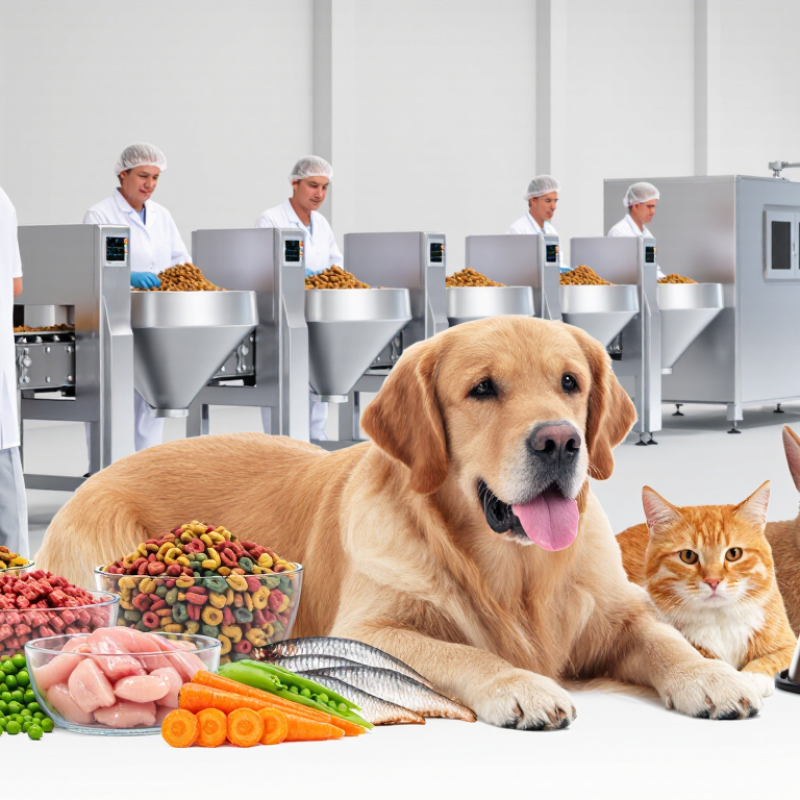
Custom pet food manufacturing covers the design and production of foods adjusted to an individual pet’s characteristics. These may include life stage, body size, activity level, ingredient sensitivities, or owner-selected preferences. The market includes recipe development, ingredient sourcing, batch production, packaging, and quality checks. A delivery subscription alone does not make a product custom; the recipe must meaningfully change. That distinction matters.
Market scale provides useful context, but it does not measure customization directly. Grand View Research estimated the global pet food market at USD 123.6 billion in 2023, while the American Pet Products Association reported USD 64.4 billion in U.S. pet food and treat spending that year. These figures describe broad demand, not the custom segment. In practice, a tailored product might use a different protein source or portion size, yet those adjustments need clear formulation standards and consistent production. A label alone proves little. Manufacturers should document ingredient specifications, batch controls, and nutritional review. Owners’ preferences can also exceed what evidence supports, so personalization should not be confused with proven health benefits. The market boundary remains somewhat blurred.
When evaluating global custom pet food manufacturers, look beyond product samples and polished presentations. Check whether the company can formulate for your target animal, life stage, and feeding format. Ask how nutrition targets are calculated and verified. A credible partner can explain ingredient specifications, batch testing, and how it manages changes in raw materials. Request sample production records, not just a brochure. No scorecard captures every trade-off.
Manufacturing controls matter. Review facility hygiene practices, allergen separation, traceability, and shelf-life testing. Ask how the company handles a batch that falls outside agreed specifications. Confirm it can provide documentation needed for your intended markets, including ingredient and nutrient information. Response time also counts: clear answers from technical staff can prevent costly misunderstandings. A large production capacity may sound attractive, but it does not guarantee flexibility for smaller trial runs. I would also verify references carefully; a successful project elsewhere may not match your product needs.
Tips: Request a pilot batch and review its sensory quality, packaging, and test results. Set written acceptance criteria before production. Keep room for revision; a first formula may need adjustment.
An objective evaluation framework based on food-safety standards, product-development capabilities, regulatory compliance, manufacturing flexibility, and supply-chain performance.
| Evaluation Dimension | Recommended Benchmark | Verifiable Data Point | Why It Matters |
|---|---|---|---|
| Food-Safety Management | Documented HACCP-based preventive controls supported by a certified food-safety system. | Current HACCP plan; ISO 22000, FSSC 22000, BRCGS, or equivalent certification where applicable. | Reduces biological, chemical, and physical food-safety risks throughout production. |
| Regulatory Compliance | Ability to manufacture and document products for the target sales markets. | Market-specific labels, ingredient approvals, traceability records, and regulatory documentation aligned with applicable authorities. | Prevents labeling, import, registration, and market-access problems. |
| Nutritional Formulation | Formulas reviewed by qualified animal nutrition professionals and tested against the selected nutritional standard. | Nutrient specification, formulation records, digestibility or feeding-test data where required, and stability information. | Supports nutritional adequacy for life stage, size, activity level, and intended use. |
| Product Formats | Capability across at least two major formats, such as dry food, wet food, treats, toppers, or supplements. | Available production lines, format specifications, pack sizes, and process-control capabilities. | Allows product portfolios to be matched to different consumer and animal needs. |
| Customization Flexibility | Ability to customize recipes, ingredients, texture, functional inclusions, packaging, and labeling. | Written change-control process, approved ingredient list, pilot-trial procedure, and sample approval workflow. | Separates true contract development capability from simple private-label repacking. |
| Ingredient Control | Approved suppliers, incoming-material testing, allergen controls, and documented ingredient traceability. | Supplier approval records, certificates of analysis, lot identification, and recall-traceability test results. | Improves consistency and helps control contamination, adulteration, and specification deviations. |
| Laboratory Testing | Routine testing based on product risk, including microbiological, chemical, nutritional, and physical checks. | Test panels, sampling plans, release criteria, retained samples, and independent-laboratory access. | Confirms product safety, composition, and batch-to-batch conformity. |
| Minimum Order Quantity | MOQ clearly stated by format, recipe, packaging type, and production run. | Written MOQ quotation with separate requirements for new formulas, standard formulas, and packaging components. | Determines whether the manufacturer is suitable for market testing, growth stages, or large-scale distribution. |
| Development Lead Time | A documented schedule covering formulation, sampling, testing, packaging approval, and first production. | Milestone-based timeline with responsibilities, approval gates, and stated assumptions. | Makes launch planning more predictable and exposes potential delays early. |
| Production Capacity | Capacity appropriate to forecast demand, with contingency for seasonal or promotional volume. | Line capacity, operating shifts, planned maintenance, utilization assumptions, and scale-up options. | Helps prevent supply shortages when demand increases. |
| Packaging Capability | Compatible packaging formats with appropriate barrier, sealing, coding, and shelf-life controls. | Pack-size range, material specifications, coding method, packaging validation, and artwork approval process. | Protects product quality and supports accurate logistics and consumer information. |
| Shelf-Life Validation | Shelf-life supported by documented stability testing rather than an unsupported estimate. | Accelerated or real-time stability records, storage conditions, expiry criteria, and packaging compatibility results. | Reduces the risk of quality loss before the stated expiry date. |
| Traceability and Recall Readiness | One-step-forward and one-step-back traceability for ingredients, packaging, finished goods, and distribution. | Lot coding, electronic or paper records, mock-recall results, and documented corrective-action procedures. | Enables rapid investigation and targeted withdrawal if a problem occurs. |
| Quality Consistency | Defined product specifications and release controls applied to every production batch. | Certificate of analysis, batch-release records, nonconformance rate, and corrective-action performance. | Maintains consistent nutritional, sensory, physical, and microbiological characteristics. |
| International Logistics | Experience with export documentation, customs requirements, palletization, and temperature or moisture controls where relevant. | Export documents, Incoterms, port or warehouse options, carton specifications, and shipment tracking process. | Improves delivery reliability and reduces cross-border compliance issues. |
| Commercial Transparency | Clear pricing structure covering formulation, ingredients, testing, packaging, tooling, freight, and change requests. | Itemized quotation, payment terms, ownership of formulas and artwork, confidentiality terms, and service-level commitments. | Makes total cost of ownership and long-term partnership risk easier to evaluate. |
Note: Benchmarks should be verified against the target market, product category, animal life stage, applicable regulations, and the manufacturer’s current audit and production records.
Custom pet food manufacturers vary by region because ingredient access, production infrastructure, and customer needs differ. In North America, many facilities offer flexible batch sizes and support for dry, wet, and gently cooked formats. Buyers can ask how recipes are reviewed by qualified animal nutrition professionals and how ingredient lots are traced. Small details matter: a clear allergen-control process, not just an attractive sample pouch.
Across Europe, manufacturers often emphasize documented quality systems and detailed product specifications. Ask for practical evidence, such as batch records, stability data, and procedures for handling formula changes.
In Asia-Pacific, production capabilities and ingredient supply can differ widely between markets. Some facilities specialize in export-scale production, while others focus on regional preferences and shorter runs. A site visit or live production walkthrough can reveal more than a polished sales sheet.
Regional labels can mislead. A company may source ingredients across borders or outsource certain production steps, so confirm where mixing, cooking, packing, and testing actually happen. Request samples from a representative production batch, then assess texture, aroma, and packaging integrity. One limitation is easy to overlook: a successful pilot run does not guarantee identical results at larger volumes. Ask how the manufacturer monitors variation and communicates when a specification cannot be met.
Custom pet food manufacturing now depends on measurable capability, not attractive packaging. APPA’s 2024 State of the Industry report recorded $150.6 billion in United States pet industry sales during 2023. FEDIAF’s 2024 facts report also estimated 139 million European households owned a pet. This demand pushes manufacturers toward flexible production, smaller pilot runs, and faster reformulation.
Strong facilities may operate extrusion, wet-food, freeze-drying, and treat lines under one quality system. They should document ingredient approval, allergen controls, batch traceability, and microbial testing.
Formulation teams often adjust protein levels, energy density, texture, and mineral balance for different life stages. Nutritional claims should be checked against recognized standards, such as AAFCO or FEDIAF guidance.
HACCP, GMP, and ISO 22000 systems add useful structure, but certificates alone do not prove daily discipline. A clean audit file can still hide weak factory habits. That is an uncomfortable reality.
Tips:
Request a pilot batch before signing a large contract. Review the certificate of analysis for moisture, protein, fat, ash, and microbiological results. Ask how the manufacturer handles rejected ingredients and recalls. Visit the production floor if possible. Smell the storage area. Observe temperature records. Small details matter. Also, require stability testing for new recipes, because shelf-life assumptions are easy to overstate. A capable partner should explain limitations clearly, rather than promise perfect results.
Top Custom Pet Food Manufacturing Companies Worldwide
Industry Trends Shaping the Global Custom Pet Food Market
Custom pet food is moving from novelty toward measurable nutritional design. Grand View Research valued the global pet food market at approximately USD 103.27 billion in 2023. Its forecast also indicates steady growth through 2030. Premium ingredients, life-stage formulas, and functional nutrition are driving this expansion.
Personalization is becoming more data-led. Owners now share details about age, weight, activity, allergies, and breed size. Manufacturers use these inputs to adjust protein levels, calorie density, texture, and portion size. The American Pet Products Association reported US pet industry spending of USD 147 billion in 2023. Pet food and treats represented about USD 58.1 billion. Demand is strong, but custom claims still require careful testing.
Fresh and gently processed recipes are gaining attention. So are recyclable packs, transparent sourcing, and shorter supply chains. FEDIAF’s 2024 report estimated that 139.7 million European households owned a pet. This large base creates room for specialized production. Yet personalization can become expensive theater. A questionnaire alone cannot prove nutritional adequacy. Reliable manufacturers need qualified nutritionists, laboratory analysis, batch controls, and feeding evidence. Subscription models also create waste when pets reject a recipe. That weakness deserves more honest reporting.
Global market value, 2023–2030 (USD billions)
The expanding overall pet food market provides context for custom nutrition, including personalized recipes and diets tailored to pets’ needs. The 2024–2030 figures shown are estimates calculated by applying the reported 4.4% compound annual growth rate to the 2023 market value; they are not custom-food segment figures.
Source: Grand View Research, Pet Food Market Size, Share & Trends Analysis.
The recipe must meaningfully change for traits such as life stage, size, activity, or ingredient sensitivities. A delivery subscription alone is not customization. Labels can mislead.
Look for recipe development, ingredient sourcing, batch production, packaging, and documented quality checks. Ask whether formulations can match your animal and feeding format. Details matter.
Ask how nutrition targets are calculated and reviewed for each life stage. Request ingredient and nutrient specifications, not just marketing claims. Evidence may be less certain than owners hope.
Review hygiene, allergen separation, traceability, microbial testing, and shelf-life testing. Ask what happens when ingredients or a finished batch miss agreed limits. Paperwork isn’t enough.
A pilot can reveal taste, texture, packaging, and production issues before a large order. Review its test results against written acceptance criteria. First attempts can be rough.
Check moisture, protein, fat, ash, and microbiological results. Confirm the results match the agreed recipe and batch. One document cannot prove everything.
Not necessarily. Large facilities may struggle with small trial runs or quick recipe changes. Ask about minimum batch sizes and actual revision timelines. Capacity isn’t flexibility.
Require stability testing for new recipes and clear records for ingredient lots and finished batches. Ask how rejected ingredients and recalls are managed. Assumptions age badly.
Custom Pet Food Manufacturing is a growing sector focused on developing and producing tailored nutrition products for pets according to specific dietary needs, life stages, health conditions, and consumer preferences. This article explores the market scope and definition of the industry, while outlining key criteria for evaluating manufacturers worldwide, including production capacity, formulation expertise, ingredient traceability, quality control, certifications, packaging options, and supply chain reliability.
It also reviews leading manufacturers by region without focusing on individual brand names, highlighting differences in facilities, service models, and regional market strengths. Special attention is given to private-label production, customized recipes, wet and dry food formats, treats, functional nutrition, and compliance with applicable safety standards. Finally, the article examines major trends shaping the global market, such as human-grade positioning, sustainable sourcing, personalized nutrition, transparent labeling, advanced research, and increasing demand for convenient, health-focused pet food solutions.