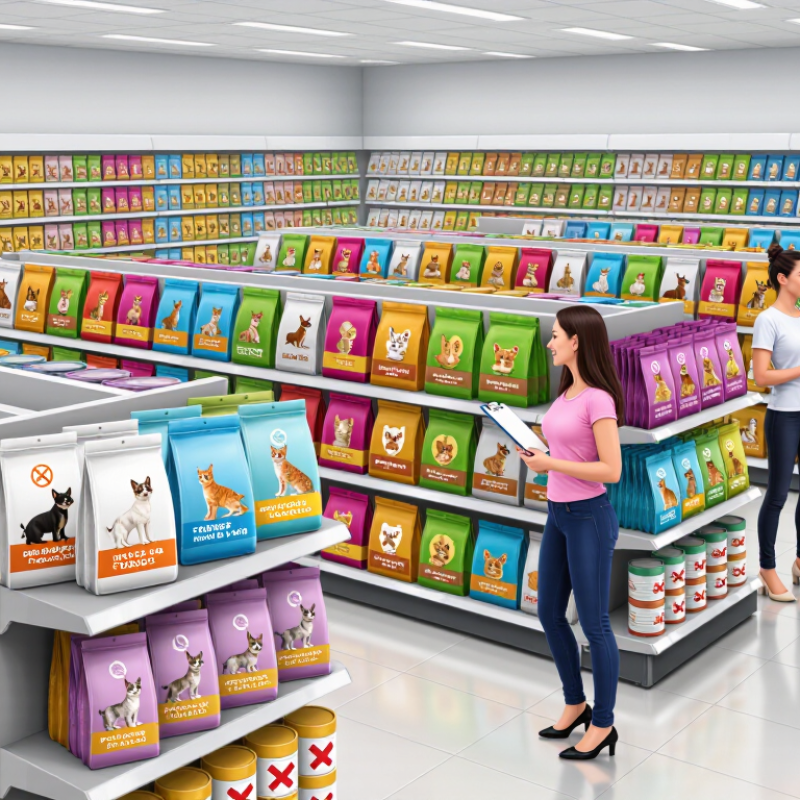
Retailer Own-Label Pet Food is moving from a budget choice toward a strategic category for modern retailers. Shelves now display grain-free recipes, limited-ingredient formulas, functional treats, and veterinary-inspired nutrition. Behind these products, specialized manufacturers manage formulation, ingredient sourcing, safety controls, packaging, and international distribution.
As Bob Vetere, a respected pet industry executive, said, “Pets are not just animals; they are part of the family.” That principle changes how retailers evaluate private-label partners. Price still matters. It cannot stand alone. Manufacturers must also deliver consistent nutrition, transparent sourcing, dependable production, and clear communication for pet owners.
This overview presents the Top 10 Retailer Own-Label Pet Food Manufacturers Worldwide. The selection considers production capacity, retailer relationships, product development, quality systems, geographic reach, and market reputation. It also recognizes manufacturers serving different business models, from supermarket chains to specialist pet retailers and online platforms.
The ranking is not flawless. Public data varies between companies, and private-label contracts are often confidential. Some manufacturers may appear stronger because they disclose more information. Others may operate quietly while producing substantial volumes. That limitation deserves attention.
Still, the companies examined here reveal important industry patterns. They show how retailers are building differentiated ranges instead of copying national brands. They also demonstrate why manufacturing expertise matters at every stage, from ingredient testing to finished-bag inspection. For buyers, investors, and category managers, these manufacturers offer a practical view of where Retailer Own-Label Pet Food is heading next.
Retailer Own-Label Pet Food: Scope, Supply Chains and Key Terms
Retailer own-label pet food is made for a retailer but produced by an external manufacturer. The retailer controls the product brief, packaging, price position, and customer promise. The manufacturer manages formulation, sourcing, production, testing, and batch records. In industry language, private label and own label often describe similar arrangements. The exact meaning can vary by market.
The supply chain starts with approved ingredients, such as animal proteins, grains, oils, vitamins, and minerals. Suppliers must provide specifications and traceability documents. A contract manufacturer then converts these inputs into dry food, wet food, treats, or specialist diets. Key terms include minimum order quantity, lead time, toll manufacturing, co-manufacturing, and factory capacity. Quality teams usually check incoming materials, processing controls, finished products, and retained samples. Small details matter. A damaged seal can affect an entire shipment.
Reliable sourcing requires more than a competitive quotation. Retailers should review audit history, laboratory methods, recall procedures, and contingency plans. They also need clear rules for label claims and nutritional statements in each target market. A formulation accepted in one region may require changes elsewhere. That part is often underestimated. In practice, supply chains rarely remain perfectly stable. Harvest conditions, transport delays, and sudden demand can expose weak planning. A strong partnership therefore depends on honest forecasts, documented decisions, and regular technical communication, not only factory size.
FEDIAF’s 2023 Data: 299 Million European Pets and €29.2 Billion in Sales
FEDIAF’s 2023 figures describe a substantial European pet-care market: 299 million pets and €29.2 billion in annual sales. Behind those numbers are ordinary routines: measured portions at breakfast, water bowls beside kitchen doors, and food carried home in heavy bags. They also point to steady demand for reliable, accessible nutrition.
For retailer own-label manufacturers, scale brings practical challenges. Production must meet consistent specifications across batches, while packaging needs to protect freshness during storage and transport. Clear ingredient information matters, too. Pet owners may compare labels closely, especially when choosing food for animals with different ages, sizes, or feeding needs. Small differences in formulation and portion guidance can affect daily use.
The headline figures need context. They represent a broad regional picture, not equal spending by every household or identical demand in every country. Market totals can also hide differences between food types and purchasing habits. The picture is not perfectly tidy. A manufacturer or retailer should treat these numbers as useful signals, then check local consumer data and product performance before making production decisions.
How to Rank the Top 10 Worldwide Own-Label Pet Food Manufacturers
Top 10 Retailer Own Label Pet Food Manufacturers Worldwide
Ranking the top ten own-label pet food manufacturers requires more than comparing factory size. A credible review should examine production experience, formulation expertise, quality controls, and international reliability. Public records, factory audits, retailer feedback, and certification evidence can reveal how consistently a manufacturer performs. However, available data is often uneven.
A practical scoring model can assign weight to product safety, ingredient traceability, research capability, manufacturing capacity, and delivery performance. Regulatory compliance should be checked across every operating market. Facility standards matter too, including hygiene systems, testing laboratories, recall procedures, and batch documentation. Sustainability deserves attention, but vague claims should not receive full credit. Price can influence the ranking, yet the lowest quotation may hide weaker support or unstable sourcing.
Tips: Compare manufacturers using the same evidence period. Request recent audit results, sample specifications, and production lead times. Check whether the manufacturer can scale without changing agreed formulas. Speak with current retail customers when possible. Small details matter. A damaged shipment or unclear label can expose deeper process problems. No ranking is perfect, and this method still depends on honest disclosure. A manufacturer with limited public information should not automatically be judged poorly, but it should receive a cautious score until its capabilities are verified. Personal experience from plant visits can improve judgment, though it may also introduce bias. That weakness deserves review.
Top 10 Retailer Own Label Pet Food Manufacturers Worldwide - How to Rank the Top 10 Worldwide Own-Label Pet Food Manufacturers
A transparent scoring framework for comparing manufacturers. The weights below are proposed evaluation criteria, not a verified ranking of specific companies; facility-level capacity and customer information are often not publicly disclosed.
| Rank |
Evaluation criterion |
Weight |
Evidence to assess |
Why it matters |
| 1 |
Food-safety and quality systems |
18% |
Current, independently verifiable certifications; audit outcomes; traceability and recall procedures. |
Safety controls and consistent quality are essential for products intended for animal consumption. |
| 2 |
Manufacturing scale and capacity |
15% |
Documented production capacity, operating sites, equipment range and ability to support demand peaks. |
Adequate capacity supports reliable supply across retail formats and regions. |
| 3 |
Product-format breadth |
12% |
Verified ability to produce relevant formats, such as dry, wet, treats and specialized nutrition products. |
A broader format range can simplify sourcing and support a more complete retailer assortment. |
| 4 |
Regulatory and market access |
11% |
Applicable registrations, export eligibility and documented compliance for intended destination markets. |
Requirements differ by jurisdiction, ingredient and product type; eligibility should be checked market by market. |
| 5 |
Ingredient sourcing and control |
10% |
Supplier approval, ingredient specifications, origin records and incoming-material testing procedures. |
Strong sourcing controls help manage ingredient variability, continuity and product specifications. |
| 6 |
Formulation and product-development capability |
9% |
Qualified nutrition and technical teams, formulation support, testing protocols and documented development process. |
Retailer-specific products require technically sound formulations and controlled product changes. |
| 7 |
On-time delivery and supply resilience |
8% |
Measured service levels, lead-time performance, contingency planning and business-continuity arrangements. |
Dependable fulfillment helps reduce stockouts and disruption across the supply chain. |
| 8 |
Packaging and private-label flexibility |
6% |
Available pack sizes and materials, labeling controls, changeover capability and minimum-order terms. |
Flexible packaging and production arrangements can better match retailer needs and local requirements. |
| 9 |
Cost competitiveness and transparency |
6% |
Comparable quotations, cost breakdowns, pricing assumptions and documented change-control terms. |
Transparent, like-for-like costing supports sustainable commercial decisions. |
| 10 |
Sustainability and resource management |
5% |
Measured energy, water and waste indicators; packaging data; and substantiated environmental targets. |
Comparable, documented measures are more useful than unverified sustainability claims. |
| Total weighting |
100% |
Score each manufacturer against the same evidence standard before assigning a final rank. |
Suggested scoring method: rate each criterion from 1 to 5 using verifiable evidence, multiply by its weighting, and disclose the assessment date and evidence limitations. Do not treat undisclosed information as a confirmed performance result.
Comparing the Top 10 Suppliers by Scale, Product Range and Retail Reach
Retailer own-label pet food suppliers should be compared on output, product breadth, and dependable retail reach—not factory size alone.
Grand View Research estimated the global pet food market at about US$103.3 billion in 2023. In the United States, the American Pet Products Association reported US$64.4 billion in pet food and treat spending that year. These figures show category scale, but neither isolates retailer-owned labels. That distinction matters.
For a top-ten comparison, scale can include reported sales, manufacturing sites, and production capacity. Product range means more than a long catalogue: check whether a supplier can make dry and wet food, treats, and formulas for different life stages. Retail reach is stronger when measured by active markets, retailer relationships, and reliable delivery—not country count alone. A supplier serving several regions may offer useful flexibility, while a regional producer may respond faster to local specifications. Small caveat: capacity is not sell-through. Public disclosures also vary, so rankings may lean on estimates rather than comparable audited figures. A ranking can still mislead. The practical test is whether a supplier can keep a consistent recipe, pack size, and delivery schedule across stores.
Manufacturing Standards, Quality Controls and Emerging Market Trends
Retailer own-label pet food depends on controls that work on an ordinary production day, not only during an audit. The FDA’s preventive-controls framework calls for hazard analysis, documented controls, monitoring, and corrective action at covered facilities. In practice, that can mean checking incoming ingredient lots, calibrating scales, and recording cooking temperatures before a batch moves to packing. Small details matter. Traceability should link each finished lot to its ingredients and production records, so teams can investigate a complaint without relying on memory.
The market is growing, but growth does not prove quality. Grand View Research estimated the global pet food market at USD 103.3 billion in 2023 and forecast a 5.3% compound annual growth rate from 2024 to 2030. The American Pet Products Association reported USD 64.4 billion in U.S. pet food and treat spending for 2023. These figures help explain rising demand for dependable capacity and consistent specifications. Emerging priorities include clearer sourcing records, tighter allergen controls, and packaging that protects freshness. Yet audits can miss small process changes between visits. That is worth reflecting on: a polished certificate cannot replace routine checks, honest deviation reporting, and staff who know when to stop a line.
Conclusion
Retailer Own-Label Pet Food refers to products developed for sale under a retailer’s own label and made through specialist supply chains. This overview explains the roles of retailers, manufacturers, and suppliers, clarifies key industry terms, and puts the market in context with FEDIAF’s reported 2023 figures: 299 million pets in Europe and €29.2 billion in pet food sales. It also sets out a practical approach to identifying leading manufacturers worldwide, using factors such as production scale, product range, and retail reach rather than relying on a single measure.
The comparison considers how suppliers differ in their ability to serve varied markets and product needs, alongside the quality controls and manufacturing standards that support consistent production. It also highlights emerging trends shaping the sector, including changing consumer expectations and the growing importance of dependable, adaptable supply chains. Together, these themes offer a framework for understanding how own-label pet food is made, evaluated, and positioned in a competitive global market.