

Choosing a Functional Cat Treats Supplier is no longer a simple price comparison. Cat owners now inspect ingredients, clinical claims, sourcing, and testing records. The American Pet Products Association reported $147 billion in U.S. pet industry spending during 2023. Its survey also recorded about 46.5 million U.S. households owning cats. That scale signals opportunity, but it also raises expectations.
A reliable supplier should connect every functional claim with a clear nutritional purpose. Digestive support may involve fiber or approved probiotics. Dental support may require suitable texture and feeding guidance. Skin support should reflect balanced fatty acids, not vague “beauty” language. Feline veterinarian Dr. Jean Hofve states, “Cats are obligate carnivores.” Her reminder matters when suppliers formulate treats around meat quality and species-appropriate nutrition. A glossy package cannot replace evidence.
Reports from Grand View Research describe continued growth in premium and functional pet nutrition. However, market growth does not prove that every product works. That is the uncomfortable part. Buyers still need certificates of analysis, batch traceability, ingredient specifications, and stability information. They should also ask whether feeding trials support the intended benefit. Small details matter. A supplier that explains dosage, storage, contraindications, and quality controls demonstrates practical expertise.
The strongest partner offers more than private-label manufacturing. It provides transparent sourcing, consistent production, responsive technical support, and honest limitations. Claims should remain measurable and responsible. Cats are individuals, too. A useful treat must fit the cat, the diet, and the veterinarian’s advice. That standard may slow purchasing decisions, but it protects trust and long-term brand value.
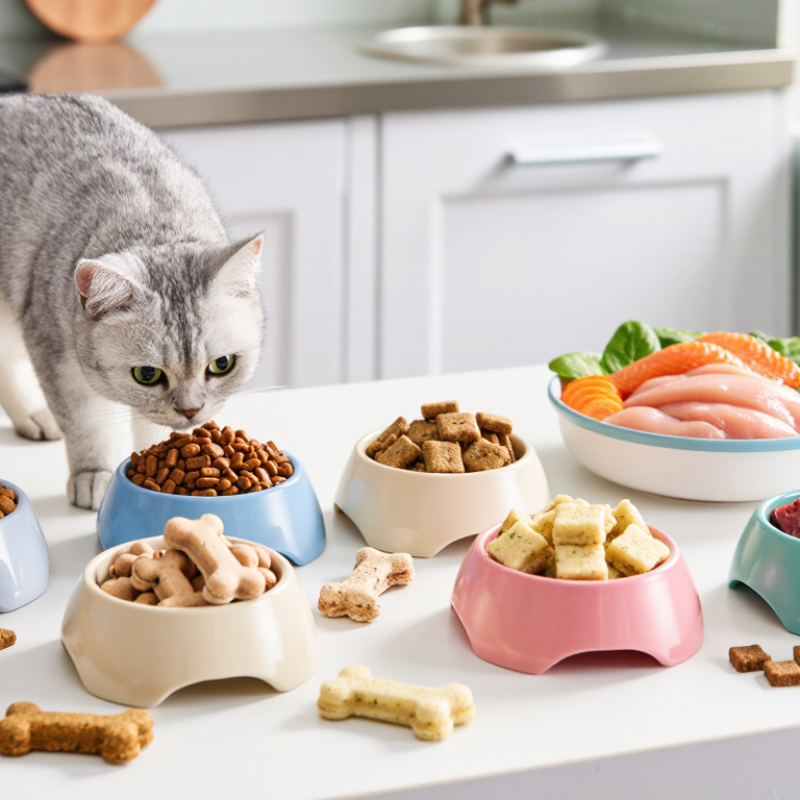
Functional cat treats are small portions designed to support a specific feline need, beyond simple enjoyment. They may contain fiber for digestive support, omega-3 fatty acids for skin and coat health, or controlled minerals for dental care. The term has no single universal definition, so ingredient purpose matters.
The 2024 State of the Industry Report from the American Pet Products Association estimates 39.6 million U.S. households own cats. That large population does not make every wellness claim reliable. A professional supplier should explain ingredient levels, feeding amounts, testing methods, and storage conditions. Look for clear nutrition panels and documented quality controls.
Evidence matters more than attractive packaging. A supplier should distinguish research-backed benefits from marketing language. Clinical data may be limited for some botanical ingredients. That deserves honesty. I would ask whether digestibility, palatability, and safety were tested in cats, not only in other animals. The European Pet Food Industry’s 2024 facts report also highlights the importance of complete, transparent pet nutrition across a large regional market. Functional treats should complement a balanced diet, not replace veterinary care or daily meals. A supplier can still make mistakes. Reliable partners admit uncertainty and improve formulas through measured feedback.
Why Choose a Functional Cat Treats Supplier?
Key Benefits of Choosing a Specialized Supplier
A specialized supplier understands that treats should support daily feline care, not merely taste good. In practice, product developers can select functional ingredients for goals such as dental hygiene, digestive comfort, or coat support. They can also adjust texture, calorie density, and serving size for different life stages. This matters when a cat refuses hard pieces or gains weight easily. Clear ingredient specifications, batch records, and laboratory testing provide useful evidence. Ask for current certificates and feeding guidance. Vague promises are not enough.
Tips: Request a complete ingredient list, analytical values, storage instructions, and a recent quality report. Check whether the supplier explains each ingredient’s purpose in plain language. A reliable partner should discuss palatability trials, allergen controls, and traceability clearly. Small details count. Moisture-resistant packaging can protect soft treats during shipping. Still, no supplier can guarantee the same response for every cat. Individual tolerance varies, and I have seen a promising formula need adjustment after cats ignored its smell or texture.
Specialized support can improve consistency for retailers and caregivers. Suppliers may offer stable formulations, practical minimum orders, and portion-control guidance. Their technical teams can refine a recipe instead of adding fashionable ingredients without a clear purpose. Independent veterinary review is valuable when health-related claims appear. Functional treats should complement a balanced diet, not replace professional care. Ask difficult questions early. That saves time later.
A specialized supplier can formulate and verify functional treats against precise feline nutrition targets instead of relying only on general treat production capabilities.
The chart shows selected minimum nutrient concentrations for adult cat food on a dry-matter basis under AAFCO nutrient profiles. These values are reference points for formulation and quality verification; treats marketed as complementary foods do not automatically need to meet complete-and-balanced food profiles.
Why Choose a Functional Cat Treats Supplier?
How Suppliers Ensure Quality, Safety, and Product Consistency
A capable functional cat treats supplier treats quality control as a daily process. Experienced teams inspect raw materials before production begins. They check ingredient identity, moisture, odor, and storage conditions. Clear supplier records help confirm where each ingredient originated. Certificates of analysis can support testing for nutrients, microbes, and unwanted contaminants. These documents should match the actual production lot, not a generic sample.
Safety also depends on controlled manufacturing. Responsible facilities use written procedures for cleaning, mixing, heat treatment, and packaging. Production staff record temperatures, equipment checks, and batch numbers. Retained samples allow later review when a concern appears. Traceability matters. A supplier should quickly identify affected materials and distribution records. This practical discipline builds confidence beyond attractive packaging.
Consistency requires more than repeating a recipe. Suppliers monitor particle size, texture, weight, aroma, and active ingredient levels. They compare finished batches against approved specifications. Packaging must also protect freshness from humidity and oxygen. Still, no process is perfect. Natural ingredients can vary, and cats may respond differently. A thoughtful supplier admits this limitation and improves controls over time. Open communication, technical documentation, and independent verification make that improvement easier to trust. Cats notice small changes. Owners do too.
| Control Dimension | Key Quality Indicator | Typical Supplier Requirement or Data Point | Why It Matters for Functional Cat Treats |
|---|---|---|---|
| Ingredient Qualification | Approved ingredient sources | Documented supplier approval, specifications, allergen declarations, and lot-level Certificates of Analysis where applicable | Helps confirm that active ingredients, proteins, oils, and carriers meet defined identity and purity requirements. |
| Food Safety System | Preventive food-safety controls | Written hazard analysis, preventive controls, sanitation procedures, and documented corrective actions | Reduces biological, chemical, and physical hazards during receiving, processing, packaging, and storage. |
| Microbiological Safety | Pathogen and hygiene testing | Routine testing based on product risk, with release criteria defined for organisms such as Salmonella and indicator organisms | Cats and household members can be exposed to contaminated treats, so microbiological controls are essential. |
| Moisture Control | Moisture and water activity | Dry treats commonly target water activity at or below 0.60, while the approved specification depends on the recipe and packaging system | Consistent moisture control supports shelf stability, texture, and resistance to microbial growth. |
| Active Ingredient Accuracy | Assay or concentration verification | Testing confirms that declared nutrients or functional ingredients remain within the approved specification range | Supports reliable delivery of ingredients such as taurine, omega fatty acids, fiber, or other nutrition-related components. |
| Batch-to-Batch Consistency | Physical and nutritional parameters | Defined limits for piece weight, dimensions, color, texture, moisture, nutrient content, and packaging weight | Maintains predictable serving sizes, appearance, palatability, and functional positioning. |
| Contaminant Management | Chemical and physical contaminant controls | Risk-based controls for mycotoxins, heavy metals, pesticide residues, foreign material, and undeclared allergens | Protects animal health and helps suppliers meet applicable feed and food-safety requirements. |
| Traceability | One-step-back and one-step-forward records | Each finished batch is linked to production records, ingredient lots, packaging materials, and distribution information | Enables faster investigations, targeted withdrawals, and effective recall management. |
| Shelf-Life Validation | Stability and packaging evaluation | Real-time or accelerated studies assess appearance, odor, texture, moisture, active ingredients, and microbiological quality through the stated shelf life | Helps ensure the product remains safe and suitable until the printed best-before date. |
| Packaging Integrity | Seal and barrier performance | Routine checks for seal strength, leakage, oxygen and moisture barrier performance, coding accuracy, and pack weight | Protects sensitive ingredients from air, humidity, light, and contamination during storage and transport. |
| Label and Claims Review | Regulatory and scientific substantiation | Ingredient list, guaranteed analysis, feeding directions, net quantity, lot identification, and functional claims are reviewed before release | Improves transparency and reduces the risk of misleading or unsupported product claims. |
| Quality Documentation | Production and testing records | Complete batch records, test results, deviations, release approvals, and retained samples are maintained according to documented procedures | Creates an auditable record of how every batch was produced, tested, and released. |
| Supplier Performance | Corrective action and complaint trends | Key indicators include out-of-specification rate, customer complaints, on-time delivery, audit findings, and corrective-action closure time | Provides measurable evidence that the supplier can maintain quality over time rather than only during initial approval. |
Note: Specifications and testing frequencies should be risk-based and confirmed against the applicable regulations, product format, target market, and approved product formula.
Choosing a functional cat treats supplier requires more than comparing prices. Product evidence, manufacturing discipline, and communication matter equally.
APPA’s 2024 State of the Industry report recorded US pet industry spending of 147 billion dollars in 2023. FEDIAF’s 2024 Facts & Figures report also estimated 139 million European households owned pets. This demand increases supplier competition, but quality can vary. Look for clear ingredient percentages, guaranteed analysis, allergen controls, and batch-level traceability. A reliable supplier should provide certificates of analysis and explain testing methods. Claims about dental, digestive, or skin support should match credible studies, not attractive wording alone. Independent laboratory verification is valuable. Palatability testing matters too, because an excellent formula is useless if cats refuse it.
Tips: Request recent test documents, not generic templates. Check whether the supplier can explain shelf-life decisions in plain language. Ask for a small production sample before committing. Confirm packaging protects texture, aroma, and moisture. Also review complaint handling and recall procedures. These details reveal operational maturity.
However, no supplier is perfect. Even strong documentation may not predict every cat’s response, especially among older cats or those with sensitive digestion. I would record trial results, stool changes, acceptance rates, and customer feedback before expanding an order. That extra step feels slow, but it can expose weaknesses early. Supplier evaluation should therefore combine published data, factory evidence, and practical feeding experience.
Choosing a functional cat treats supplier starts with your cat, not a colorful package. Age, weight, activity, dental condition, and known sensitivities all matter. A kitten may need smaller pieces, while an older cat may prefer softer textures. Ask whether each ingredient has a clear purpose. Vague claims deserve careful questions.
A reliable supplier should provide complete ingredient lists, guaranteed analysis, feeding guidance, and batch traceability. Look for transparent sourcing and documented quality testing. Independent laboratory checks can help verify safety and nutritional details. Veterinary advice is especially valuable for cats with kidney disease, allergies, obesity, or digestive problems. Treats should support a diet, not quietly replace it.
Small details reveal practical quality. Can the supplier explain storage after opening? Are portions easy to measure? Does the texture remain consistent from one batch to another? A sample may crumble in your hand but become hard after a week in a humid kitchen. That matters. No supplier is perfect. Even a careful buyer can overlook calorie density or an ingredient hidden under a broad term. I would record my cat’s reaction, stool quality, appetite, and weight for several days. Then I would adjust slowly, rather than trusting an impressive promise. Fancy wording is not evidence. Clear answers are.
They are small portions designed to support a specific feline need. Examples include digestive support, coat care, dental hygiene, and portion control. They should not replace balanced meals.
Fiber may help digestive function. Omega-3 fatty acids may support skin and coat health. Controlled minerals may assist dental care. Ingredient purpose matters more than attractive wording.
Request a complete ingredient list, analytical values, feeding instructions, and storage guidance. Ask for batch records and recent quality testing. Clear answers matter. Vague promises do not provide enough evidence.
No. Some ingredients have limited research in cats. Ask whether safety, digestibility, and palatability were tested specifically in cats. Research may still be incomplete. That uncertainty should be stated plainly.
Consider age, weight, activity, dental condition, and known sensitivities. Kittens may need smaller pieces. Older cats may prefer softer textures. A colorful package cannot make that decision for you.
Check calorie density, serving size, ingredient sources, and allergen controls. Confirm that the supplier explains storage after opening. Also ask whether batches remain consistent. Small details matter.
Introduce a small portion and observe appetite, stool quality, weight, and behavior. Keep notes for several days. Adjust gradually. I might trust an impressive claim too quickly, so records help correct me.
No. They should complement a balanced diet and professional guidance. Veterinary advice is important for cats with allergies, obesity, kidney disease, or digestive problems. Treats are supportive, not curative.
Functional cat treats are specially formulated snacks designed to provide targeted nutritional support alongside everyday enjoyment. They may help address needs such as dental care, digestion, skin and coat health, weight management, or general wellness. Choosing a specialized Functional Cat Treats Supplier can make it easier to access products developed with clear purposes, appropriate ingredients, and consistent nutritional standards. Experienced suppliers typically use controlled production processes, quality testing, traceable ingredients, and careful packaging to help ensure safety, freshness, and reliable results from batch to batch.
When comparing suppliers, cat owners should evaluate ingredient transparency, nutritional information, manufacturing standards, product testing, customization options, minimum order requirements, and customer support. It is also important to consider the cat’s age, health condition, dietary sensitivities, activity level, and taste preferences. The right supplier should offer suitable formulas, communicate clearly, and provide dependable quality without making unrealistic claims. By assessing these factors carefully, owners can choose functional treats that complement a balanced diet and support their cat’s specific needs responsibly.