

The global pet food packaging market is undergoing a dramatic structural transformation. Driven by the rapid humanization of pet nutrition, pet owners today demand packaging solutions that mirror human-grade food safety, premium visual aesthetics, environmental sustainability, and functional convenience. As a premier **China wholesale pet contract packaging manufacturer & exporter**, our enterprise delivers advanced OEM and ODM packaging systems optimized for automated contract fillers, retail distribution channels, and direct-to-consumer (D2C) e-commerce platforms.
Preserving the nutritional integrity of dry kibble, freeze-dried treats, raw meat diets, and wet thermal-retort formulations requires strict barrier science. Micro-nutrient oxidation, moisture absorption, lipid rancidity, and volatile aromatic loss are constant threats to pet food shelf life. By employing multi-layer co-extrusion, ceramic silicon oxide (SiOx) and aluminum oxide (ALOx) coatings, high-purity aluminum foil barriers, and mono-material recyclable polymers, our packaging configurations guarantee optimal Oxygen Transmission Rates (OTR < 0.1 cc/m²/24h) and Water Vapor Transmission Rates (WVTR < 0.1 g/m²/24h).
Operating out of state-of-the-art facilities compliant with **BRCGS Packaging Materials (Issue 6), ISO 22000, ISO 9001, and US FDA 21 CFR 177 standards**, our contract packaging capabilities span high-speed flexible pouch converting, rigid container molding, metal tinplate canning, and eco-conscious folding displays. We empower pet food brand owners, private label retailers, and commercial co-packers to reduce product spoilage, elevate shelf presence, and achieve full circular packaging economy targets.
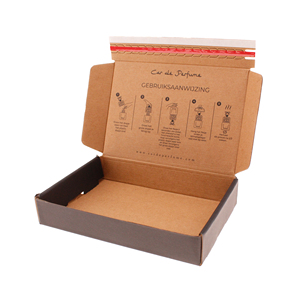
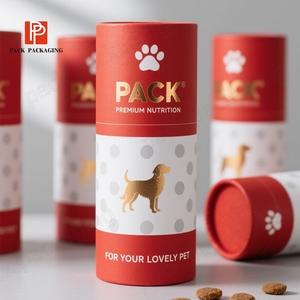
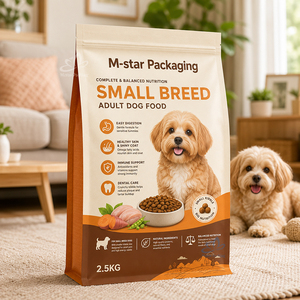
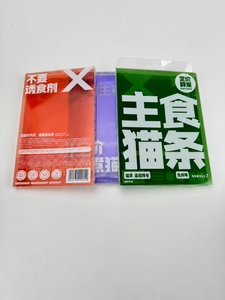
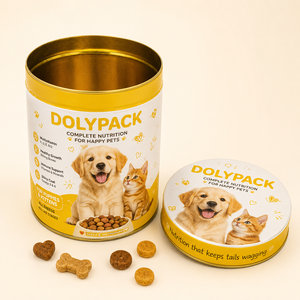

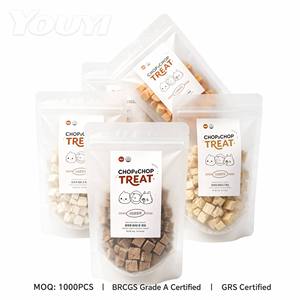
| Packaging Format | Material Structure (Outer / Barrier / Inner) | OTR (cc/m²/24h) | WVTR (g/m²/24h) | Primary Pet Food Application |
|---|---|---|---|---|
| Flat Bottom Quad Seal Bag | PET / AL / BOPA / CPP or PE | < 0.05 | < 0.05 | Dry Organic Kibble, Veterinary Diets (5kg - 15kg) |
| Retort Flexible Pouch | PET / AL / BOPA / R-CPP | < 0.10 | < 0.10 | Wet Meat Gravy, Loaf Pouches, Gravy Toppers |
| Mono-PE Recyclable Bag | MDO-PE / PE-EVOH / LLDPE | < 0.50 | < 0.80 | Eco-Conscious Kibble & Soft-Moist Treats |
| Transparent Stand-Up Pouch | Matte PET / SiOx-PET / LLDPE | < 0.80 | < 1.00 | Freeze-Dried Meat Nuggets, Dental Chews |
| Tinplate 3-Piece Can | ETP Tinplate / Organosol Lacquer | 0.00 | 0.00 | Premium Canned Wet Cat & Dog Food |
As international regulatory frameworks enforce stricter packaging sustainability laws (such as the EU Packaging and Packaging Waste Regulation - PPWR), global pet food buyers must align their contract manufacturing procurement strategies with emerging structural trends:
1. Acceleration toward Full Mono-Material Recyclability: Traditional multi-layer laminates combining PET, Foil, and PE are increasingly subjected to eco-tariffs and plastic tax penalties in Western Europe and North America. The industry is aggressively shifting to mono-material Polyethylene (PE/PE) and Polypropylene (PP/PP) structures that offer identical barrier properties while maintaining full compatibility with mechanical recycling streams.
2. Rapid Growth of High-Barrier Retort Pouches vs. Metal Cans: While tinplate cans remain a staple for wet food, flexible retort pouches are rapidly gaining market share due to a 60% weight reduction, lower carbon footprint during maritime freight, superior consumer convenience (easy-tear notches), and optimized heat penetration during processing which preserves nutrient density.
3. E-Commerce & ISTA-6 Amazon Compliant Packaging: Direct-to-Consumer (D2C) shipping channels demand packaging that resists burst pressures without requiring secondary protective wrap. Co-extruded heavy-duty bags fitted with specialized multi-track zippers and puncture-resistant nylon layers are becoming mandatory to pass ISTA 6-Amazon Over-the-Box drop testing.
4. Smart Packaging and Active Atmosphere Control: Integration of modified atmosphere packaging (MAP) with high-purity nitrogen flushing systems (maintaining oxygen residuals below 0.5%) alongside interactive QR codes for full ingredient traceability from farm to bowl is now a standard requirement for premium brand differentiation.