
High-protein extrusion, wet treats, and specialized packaging engineered for tropical distribution
The pet care ecosystem across the Philippine archipelago is undergoing a structural transformation. Driven by rapid urbanization in major metropolitan hubs such as Metro Manila, Metro Cebu, and Metro Davao, combined with an expanding middle class and increasing nuclear family setups, pet ownership—specifically feline companionship—has surged. Historically dominated by household scraps or low-grade localized feeding routines, the Philippine market is demonstrating an unprecedented migration toward commercial, nutritionally complete dry cat food.
For international distributors, retail brand owners, agrivet wholesalers, and supermarket chain procurement executives, navigating the Philippine pet food market requires a sophisticated understanding of both consumer behavior and local environmental constraints. The tropical maritime climate of the Philippines presents unique operational challenges: year-round high ambient humidity, elevated temperatures, and logistical hurdles across an island network. Consequently, sourcing complete dry kibble is no longer strictly a question of ingredient costs; it demands formulation stability, low water activity ($a_w$), anti-oxidative fat protection, and advanced barrier packaging design.
As a world-class pet food manufacturer and global exporter, Partner in Pet Food (PPF) leverages more than 25 years of industrial heritage, managing 12 advanced European production facilities to formulate, extrude, and package high-performance dry cat food formulas engineered specifically for international distribution. This white paper serves as an authoritative guide for B2B importers seeking to capture market share in the Philippines by offering superior nutritional density, tailored OEM/ODM solutions, and stringent regulatory compliance.
To successfully establish or scale a pet food brand within Luzon, the Visayas, and Mindanao, procurement managers must align their product portfolios with localized consumer preferences and physical distribution channels:
Urban condo living and smaller residential footprints have elevated cats as the preferred urban pet in Manila and Cebu. Pet parents increasingly view cats as family members, shifting purchasing criteria toward premium protein sources, grain-free options, and specialized life-stage formulas (Kitten, Adult Maintenance, Senior, Sterilised).
In hot, humid climates, domestic cats often under-consume water, drastically raising the risk of Feline Lower Urinary Tract Disease (FLUTD), struvite crystal formation, and renal stress. High-ranking dry cat foods in the Philippines must incorporate strict ash control, controlled magnesium levels (Mg < 0.1%), and balanced urinary pH targeting (6.2 – 6.5).
While traditional Agrivet stores and wet markets still command significant volume in provincial regions, modern trade channels (supermarket chains) and social e-commerce platforms (Shopee, Lazada, TikTok Shop) dominate urban purchasing. Products require durable, puncture-resistant packaging that withstands last-mile logistics.
Dry cat food must function as a complete and balanced daily diet according to established international standards (FEDIAF and AAFCO nutritional profiles). Felines are obligate carnivores requiring precise bio-available amino acids, essential fatty acids, and micro-nutrients that cannot be synthesized internally.
| Nutritional Parameter | Standard Kitten Formula | Adult Maintenance (High Protein) | Sterilised / Indoor Urinary Control | Functional Role & B2B Benefit |
|---|---|---|---|---|
| Crude Protein (Min.) | 34.0% – 38.0% | 30.0% – 35.0% | 32.0% – 36.0% | Sourced from premium poultry, beef, salmon meal for muscle maintenance. |
| Crude Fat (Range) | 14.0% – 18.0% | 12.0% – 16.0% | 9.0% – 12.0% | Enriched with Omega-3/6 fatty acids for coat shine and skin health. |
| Crude Fiber (Max.) | 3.0% | 4.0% | 5.5% – 7.0% | Natural beet pulp & lignocellulose for hairball passage & gut flora. |
| Taurine Concentration | ≥ 0.15% | ≥ 0.12% | ≥ 0.15% | Essential amino acid for cardiac function and retinal integrity. |
| Magnesium / Phosphorus | Balanced (1.0% Ca / 0.8% P) | Balanced (1.1% Ca / 0.9% P) | Controlled (Mg < 0.09%, P < 0.8%) | Prevents urinary stone formation in tropical climate conditions. |
| Water Activity ($a_w$) | < 0.60 | < 0.60 | < 0.60 | Inhibits mold growth, mycotoxins, and bacterial proliferation. |
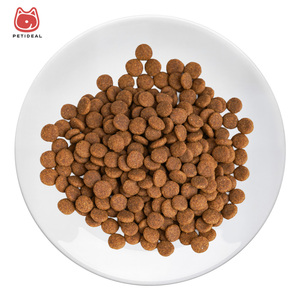
During the double-screw thermal extrusion process at our European facilities, pre-conditioned starches are fully gelatinized to ensure digestive safety, preventing gastrointestinal distress. Furthermore, dry kibbles undergo a proprietary vacuum-coating process where refined animal fats, omega oils, and natural palatants (chicken liver digests) are infused deep into the kibble core, ensuring uniform flavor distribution without leaving oily residues on the bag interior.
Importing dry pet food into tropical zones demands rigorous package engineering. Exposure to high humidity and temperature fluctuations during maritime transit across the Pacific Ocean or South China Sea can compromise kibble crispness, cause fat oxidation (rancidity), and promote fungal spoilage if the barrier packaging is inadequate.
PPF’s OEM packaging solutions incorporate high-barrier laminated structures designed to block Moisture Vapor Transmission (MVTR) and Oxygen Transmission (OTR):
Utilizing PET / AL / PE and PET / MPET / PE structures that provide 100% light opacity, preventing ultraviolet degradation of light-sensitive vitamins ($A, D_3, E$) and stabilizing fats against oxidation.
Integrated top zipper locks allow end-consumers in humidity-heavy regions (such as coastal Philippine cities) to open, portion, and reseal bags tightly, preserving kibble freshness over weeks of use.
For 10kg, 15kg, and 20kg commercial or Agrivet supply packs, integrated air degassing valves allow excess trapped air to escape while preventing moist external air from entering during container transport.
Designed for high structural stability on retail shelves (SM Supermarkets, Robinsons Retail), ensuring strong visual impact and high resistance to bursting during sea freight stack pressure.
In air-conditioned grocery outlets, high-end visual appeal, clear nutritional claims (e.g., "Hairball Control", "Urinary Health", "No Added Wheat"), and English/Filipino regulatory labelling are essential. Small to medium bag sizes (400g, 1.2kg, 2kg, 3kg) move fastest in these environments.
Outside major metro areas, pet owners frequent local Agrivet stores where kibble is often purchased in bulk or cost-effective large bags. Offering 10kg, 15kg, and 20kg high-protein, cost-competitive formulas enables distributors to capture volume in traditional trade.
Filipino veterinarians and pet shop owners favor specialized formulas targeting specific feline conditions: sterilised cat weight management, sensitive digestion (monoprotein formulas like Rabbit or Salmon), and grain-free puppy/kitten growth kibbles.
For online brands shipping via parcel networks throughout the Philippine island chain, corrugated outer box compliance, puncture-proof pouch laminates, and compact Doypack pouch packaging prevent transit damages and consumer returns.
Selecting an international contract manufacturer or OEM dry cat food partner requires evaluating industrial stability, quality assurance certifications, and long-term scalable capacity. As an established European leader headquartered in Budapest, Hungary, PPF brings unmatched operational scale to global B2B partnerships:
Operating a network of 12 modern manufacturing facilities across Europe provides total supply chain resilience. Dual-sourcing capabilities guarantee uninterrupted production schedules, shielding importers from single-factory downtime risks.
All facilities strictly adhere to the highest global safety standard audits (International Featured Standards - IFS, British Retail Consortium - BRC, HACCP, ISO 22000). Every batch undergoes rigorous mycotoxin, salmonella, and heavy metal screening before container loading.
Guided by our four strategic sustainability pillars—Performance, Environment, Team, and Society (PETS)—we utilize sustainably sourced ingredients, optimize energy efficiency, and lead the market in recyclable packaging materials.
Launching an exclusive retailer own-label pet food brand in the Philippines involves a seamless, turnkey methodology designed to take your concept from initial formulation to shelf delivery:
Define targeted feline segment (Economy, Premium, Super-Premium), target price points per kg, kibble shapes, and specific functional health claims tailored to Philippine pet owners.
Our veterinary nutritionists formulate compliant recipes featuring optimized protein/fat ratios, palatability enhancers, micro-encapsulated vitamins, and precise moisture thresholds.
Finalize die-lines, multi-layer foil choices, high-definition rotogravure or flexographic printing, and verify mandatory BAI (Bureau of Animal Industry) compliance labelling.
Industrial production in our European factories, followed by quality release testing, container consolidation, export documentation, and shipping to Manila (North/South Harbor) or Cebu Ports.
Importing commercial pet food into the Philippines requires strict adherence to national agricultural standards enforced by the Department of Agriculture - Bureau of Animal Industry (DA-BAI). Failure to provide appropriate documentation can lead to costly port delays, detention, or customs rejection.
Our standard Minimum Order Quantity (MOQ) for custom private-label dry cat food extrusion typically starts at 5 to 10 metric tons per formulation recipe, depending on bag size and packaging specifications. For existing PPF branded formulas, flexible container-load (FCL 20ft/40ft) consolidation is available to support market testing.
We achieve long shelf-life stability through a combination of low initial moisture control during thermal drying (maintaining water activity $a_w < 0.60$), natural antioxidant preservation systems (tocopherols and rosemary extract), and high-barrier metalized packaging bags that prevent moisture migration and oxygen penetration.
Yes. Our R&D team has developed proven, veterinary-tested functional recipes targeting indoor cat health, hairball elimination through natural fiber matrices, urinary pH balance with controlled mineral profiles, and calorie-controlled formulas for sterilised felines.
Absolutely. We provide complete technical dossiers, certified Certificates of Analysis, Manufacturing Process Descriptions, and European Health Certificates required by the Philippine Bureau of Animal Industry (BAI) for smooth registration and import clearance.
The initial private label setup phase (packaging artwork approval and cylinder engraving) takes approximately 3 to 4 weeks. Once packaging is ready, production and extrusion require 2 to 3 weeks. Ocean transit from European ports to Manila Harbor or Cebu Port typically ranges from 30 to 40 days.
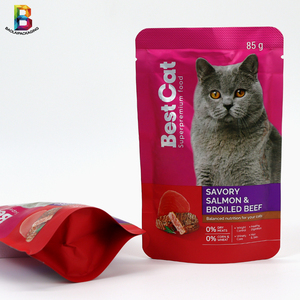
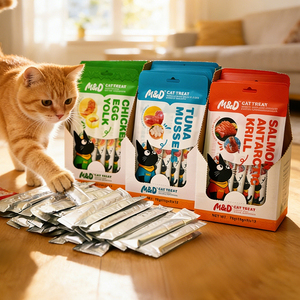
Yes, alongside dry kibble production, PPF manufactures complete wet foods in cans, doy-pack retort pouches (70g/85g), and liquid cat treats. Mixed container sourcing can be coordinated across our European facility network.
Partner with a premier European pet food manufacturer. Gain immediate access to advanced thermal extrusion, veterinary-backed nutritional science, high-barrier packaging, and scalable global supply chain reliability.