1. Industry Whitepaper: The Evolution of Cat Nutrition & Extrusion Supply Chains in Nigeria
The West African pet care landscape is undergoing a structural paradigm shift, with Nigeria serving as the primary growth catalyst for premium extruded cat food demand. Historically dominated by home-cooked scraps and low-margin imported dog foods, urban centers such as Lagos, Abuja, Port Harcourt, and Ibadan are witnessing an exponential rise in urban feline ownership. Driven by demographic shifts, expanding middle-class disposable income, and the rapid humanization of pets, modern Nigerian pet owners are actively moving away from raw feeding toward scientifically formulated, extruded dry kibble and functional wet treats.
For commercial importers, regional distributors, retail superstores, and agricultural entrepreneurs in Nigeria, sourcing pet food requires addressing strict climatic, logistical, and biological challenges. West Africa’s high ambient temperatures and elevated relative humidity (often exceeding 85% during the rainy season) create harsh operational environments for fat oxidation, kibble degradation, and mycotoxin formation. Consequently, establishing a robust procurement pipeline with certified, high-technology extruded cat food factories is essential. High-shear twin-screw extrusion technology ensures complete starch gelatinization, optimal moisture activity ($a_w < 0.60$), and structural kibble integrity designed to survive long maritime shipping routes and tropical warehouse storage.
2. Thermal Twin-Screw Extrusion Science: Optimizing Nutrient Density for Felines
As obligate carnivores, cats possess a specialized metabolic architecture requiring high dietary protein levels, specific amino acids (such as taurine, arginine, and lysine), and pre-emulsified animal fats. Single-screw extruders often fail to process recipes containing high fresh meat slurries due to mechanical torque limitations. As a global manufacturing leader operating 12 state-of-the-art production sites, our OEM/ODM facilities utilize advanced twin-screw co-rotating extrusion systems capable of handling up to 60% fresh meat inclusion.
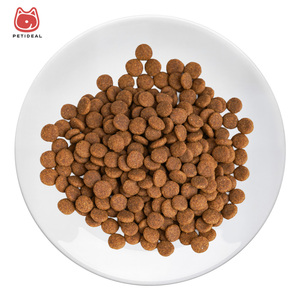
The twin-screw extrusion process Subjects raw ingredients to precise micro-zones of thermal heating, mechanical shear, and high pressure (20 to 40 bar). This process achieves complete starch cook (gelatinization > 92%), eliminating anti-nutritional factors while rendering complex animal proteins highly digestible. Furthermore, vacuum-assisted liquid fat coating post-extrusion guarantees that thermo-labile vitamins, omega-3/6 fatty acids, and natural palatability enhancers are evenly infused into the kibble core rather than remaining on the outer surface, preventing oil migration and rancidity in tropical African storage conditions.
| Manufacturing Parameter |
Standard Single-Screw Extrusion |
Advanced OEM Twin-Screw Technology |
Benefit for Nigerian Importers |
| Fresh Meat Inclusion |
Maximum 15% - 20% |
Up to 50% - 60% Fresh Protein |
Higher palatability & biological value for cats. |
| Starch Gelatinization Rate |
75% - 82% |
92% - 98% Complete Cook |
Prevents gastrointestinal distress & loose stools. |
| Moisture Control ($a_w$) |
Variable ($a_w > 0.65$) |
Precision Micro-Control ($a_w < 0.58$) |
Resists mold, mold toxins & bacterial growth in hot climates. |
| Bulk Density Stability |
High Variance (±10%) |
Ultra-Consistent (±1.5%) |
Maximizes shipping container payload (20ft / 40ft HQ). |
| Enrobing & Fat Coating |
Surface Spraying Only |
Vacuum Coated Core Injection |
Eliminates greasy bag syndrome & fat oxidation. |
3. Localized Application Scenarios: Meeting Market Realities Across Nigerian Retail Channels
Designing a successful commercial pet food strategy for the Nigerian market requires segmenting products across localized sales channels and regional environmental realities. Our export formulations cater directly to three distinct retail and commercial operational models:
Open Markets & Wholesale Hubs
Traditional open-air markets such as Balogun, Idumota, and Mile 12 in Lagos demand resilient packaging. We provide woven polypropylene (PP) bags with internal aluminum foil moisture barriers (10kg, 15kg, 20kg bulk) that withstand high ambient humidity, rough handling, and prolonged display without tearing or losing aroma retention.
Modern Supermarket Chains
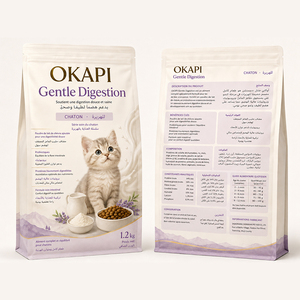
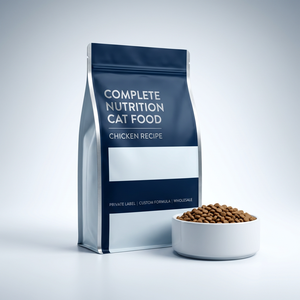
Premium retail stores in Lekki, Victoria Island, Ikeja, and Maitama (Abuja) focus on fast-moving consumer packaged goods (FMCG). Our OEM private label options deliver vibrant, high-gloss quad-seal pouches (400g, 1.5kg, 3kg) featuring laser-scanned barcodes, re-sealable zip locks, and FDA/CE certified nutritional claim labeling.
Veterinary Clinics & Breeders
Professional catteries and veterinary clinics require specialized diets targeting urinary tract health (pH control), hairball elimination, and kitten growth support. Our grain-free, high-protein formulations offer fortified taurine and zinc supplements to counter coat damage caused by heat stress in tropical environments.
4. Key Market Development Trends Shaping Cat Food Sourcing in West Africa
Understanding localized consumption patterns is vital for procurement teams seeking a competitive edge. Several macro-economic and consumer shifts are currently redefining the Nigerian cat food import ecosystem:
The "Pet Humanization" Surge
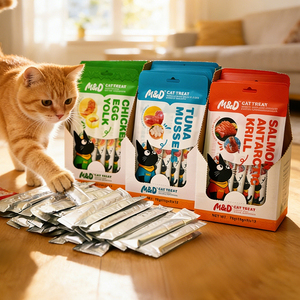
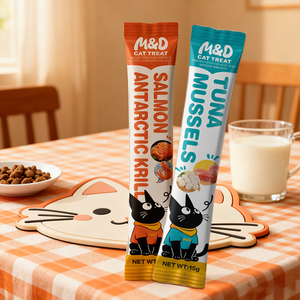
Urban millennials and middle-class households are treating cats as family members. This shift has created unprecedented demand for functional lickable wet treats (creamy puree sticks) and grain-free dry kibble that mirrors human nutritional standards.
Demand for Extended Shelf-Life
Port clearance delays and inland transportation bottlenecks mean Nigerian importers require products with verified 18-to-24 month shelf lives. Utilizing natural antioxidant complexes (mixed tocopherols and rosemary extract), our kibbles maintain freshness without artificial chemical preservatives.
Transition from Imports to Local Assembly
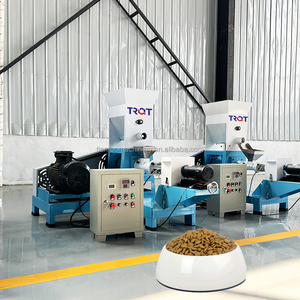
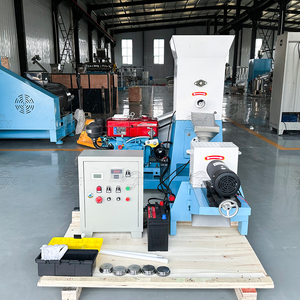
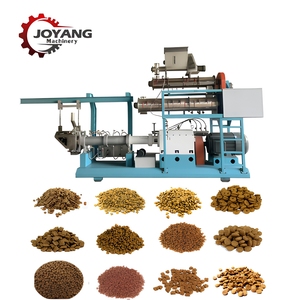
Savvy Nigerian agricultural enterprises are investing in commercial extrusion machinery to process local raw materials (cassava, poultry meal, fish meal). We supply both fully finished packaged pet foods and complete turnkey twin-screw extrusion manufacturing lines to empower local production.
Ready to Scale Your Pet Food Brand in Nigeria?
Whether you need custom private-label dry kibble, functional wet snacks, or heavy-duty extrusion machinery, our enterprise team provides complete technical, regulatory, and supply chain support.
Send an Inquiry
5. Enterprise Strengths: Why Global Importers Partner with Our Manufacturing Network
Sourcing from an international factory partner requires complete confidence in regulatory compliance, supply chain continuity, and batch-to-batch consistency. Backed by over 25 years of specialized pet food engineering, our organization operates as a premier manufacturing partner for brand owners and retail giants worldwide.
Our industrial infrastructure spans 12 state-of-the-art processing facilities equipped with fully automated continuous extrusion lines, precision steam conditioners, and NIR (Near-Infrared) real-time nutritional testing laboratories. Serving over 400 active commercial clients across 35 countries, we adhere to strict international quality management standards, including ISO 22000, HACCP, FDA registration, and European Pet Food Industry Federation (FEDIAF) nutritional guidelines.
Uncompromising Quality Assurance
Every production run undergoes 14 rigorous quality checkpoints, including heavy metal testing, mycotoxin screening, Salmonella/E. coli incubation tests, and physical kibble durability indexing (PDI).
Complete OEM / ODM Flexibility
From economy high-volume commercial lines to ultra-premium grain-free, freeze-dried raw infused formulas, we customize shape, size (3mm to 12mm), color, flavor profile, and nutritional matrix to match your market strategy.
Seamless Maritime Freight Logistics
Experienced in shipping to major West African ports (Apapa, Tin Can Island, Onne), our logistics team manages container stuffing optimization, ocean freight documentation, moisture desiccant installation, and phytosanitary certification.
6. Frequently Asked Questions (FAQ) for Nigerian Buyers & Importers
Below are technical and operational answers to common questions asked by procurement teams, regulatory officers, and distributors importing cat food into Nigeria.
What regulatory documentation is provided for NAFDAC and SONCAP registration in Nigeria?
We provide a complete suite of international regulatory documents required for NAFDAC (National Agency for Food and Drug Administration and Control) product registration and SONCAP (Standard Organization of Nigeria Conformity Assessment Program) clearance. This includes certified Certificates of Free Sale (CFS), Health/Phytosanitary Certificates issued by state veterinary authorities, detailed Qualitative & Quantitative Ingredients Analysis, Heavy Metal & Microbiological Laboratory Test Reports, and ISO/HACCP plant accreditation certificates.
How do your factory formulations resist mold and spoilage in hot, humid Nigerian storage?
Tropical stability is engineered directly into our extrusion process. We control the final product's Water Activity ($a_w$) strictly below 0.58 (far below the threshold of 0.70 required for mold and yeast proliferation). In addition, we utilize natural organic acid mold inhibitors (propionic and sorbic acid salts) combined with nitrogen-flushed, multi-layer aluminum barrier packaging to guarantee complete oxidative and biological stability even during hot-season warehouse storage in Lagos.
What is the Minimum Order Quantity (MOQ) for custom private label (OEM) cat food orders?
For standard custom-printed retail packaging (OEM dry kibble), our typical MOQ starts at 5 metric tons per formula, allowing for optimized production efficiency and cost per kilogram. For standard house-brand bulk packaging or wet treats (creamy puree sticks), lower initial MOQs (1 to 3 tons) can be accommodated to assist buyers during market testing phases.
Can you supply cat food extrusion processing machinery for local Nigerian manufacturing?
Yes. In addition to finished food products, we export complete commercial twin-screw extruder machine lines (ranging from 150 kg/h up to 5,000 kg/h capacity). We supply electric or diesel-driven extruders, industrial mesh dryers, oil-spraying coaters, and automated packaging systems, complete with spare parts, technical installation assistance, and formula matrix consulting for local Nigerian raw materials.
What shipping container loads are optimized for dry kibble exports to Lagos ports?
Dry kibble is typically packed in 1kg to 20kg commercial bags. A standard 20-foot GP container accommodates approximately 10 to 12 metric tons of floor-loaded kibble bags, whereas a 40-foot High Cube (40 HQ) container maximizes freight economics by carrying up to 24 to 26 metric tons. We install container thermal liners and industrial silica gel desiccants to prevent container sweat during ocean transit across tropical zones.
How is taurine and essential nutrient preservation ensured during the high-heat extrusion process?
Taurine and essential B-vitamins are heat-sensitive nutrients. Our nutritionists compensate for thermal processing losses by over-fortifying pre-extrusion dry mixes according to calculated retention curves. Crucially, heat-sensitive micro-nutrients, probiotics, and functional omega oils are applied post-extrusion via cold-vacuum enrobing technology, ensuring 100% active potency in the finished kibble.